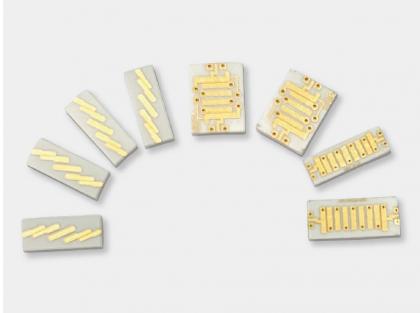
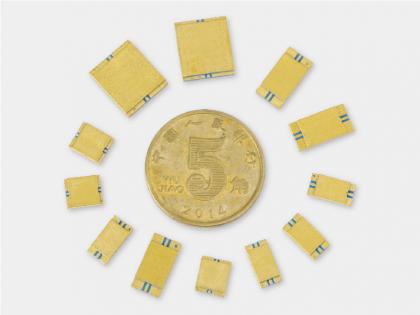
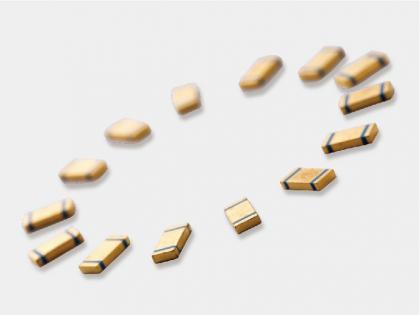
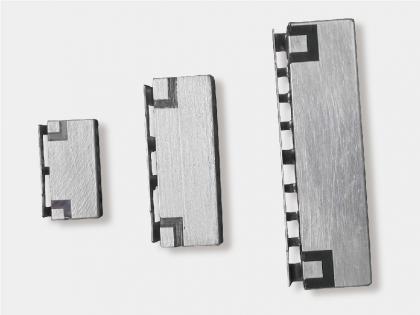
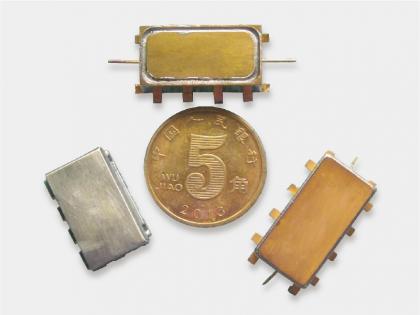
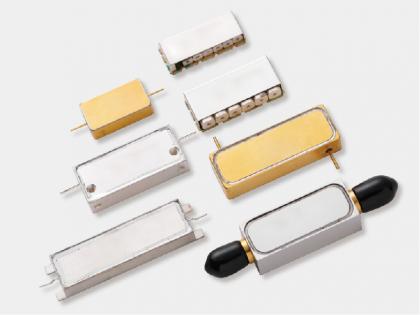
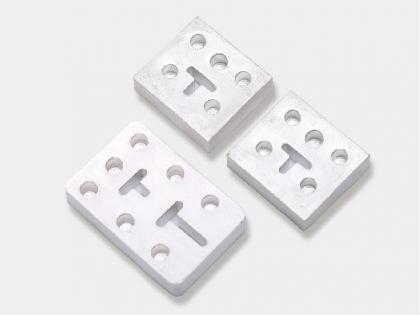
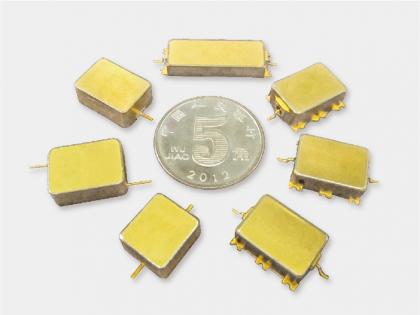
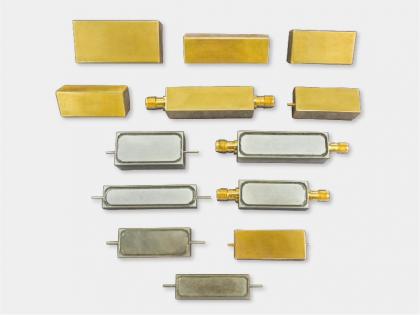
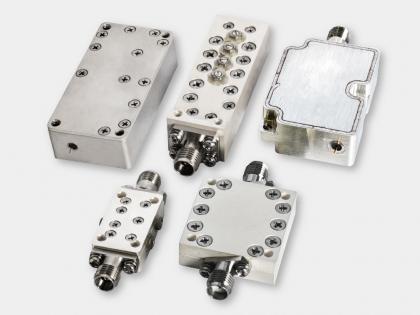
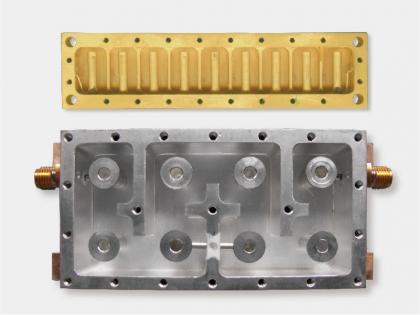
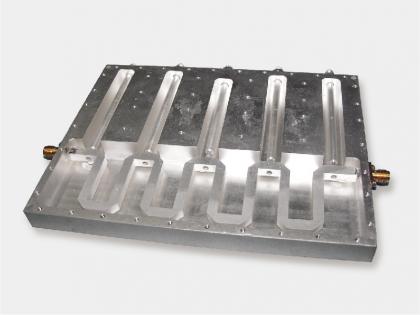
Filtres diélectriques et Filtres LTCC Les filtres diélectriques diffèrent considérablement par leur structure, leurs performances et leurs applications. Ils utilisent généralement des résonateurs en céramique à haute permittivité et atteignent la résonance grâce à des structures de type cavité ou tige. Ce sont des composants tridimensionnels relativement volumineux, mais chaque résonateur offre un facteur de qualité (Q) élevé et de faibles pertes d'insertion, ce qui les rend adaptés aux chaînes de traitement du signal RF aux exigences de performance élevées.
En termes de performances, les filtres diélectriques offrent des facteurs de qualité plus élevés et une meilleure tenue en puissance, avec une excellente stabilité de fréquence et une réjection hors bande optimale. Ils sont parfaitement adaptés aux applications de moyenne à haute puissance où la linéarité et la stabilité en température sont essentielles. Cependant, ils sont moins adaptés aux applications à forte intégration et leurs coûts de réglage et d'assemblage sont relativement plus élevés.
Les filtres LTCC sont basés sur une technologie céramique co-frittée à basse température, intégrant des conducteurs et des diélectriques multicouches dans une structure compacte, plane et modulaire. De petite taille et hautement intégrables, ils s'associent facilement à d'autres composants passifs ou modules RF. Leur facteur Q et leur capacité de gestion de la puissance sont généralement inférieurs à ceux des filtres diélectriques, ce qui les rend plus adaptés aux terminaux de communication miniaturisés de faible à moyenne puissance et aux applications de modules RF haute densité.
Yun Micro , en tant que fabricant professionnel de composants passifs RF, peut offrir filtres à cavité jusqu'à 40 GHz, ce qui inclut Filtre passe-bande, filtre passe-bas, filtre passe-haut, filtre coupe-bande.
N'hésitez pas à nous contacter : liyong@blmicrowave.com


adresse : Xisan Road, Mechanical and Electrical Industrial Park, No.767 Yulan Road, Hefei,Anhui.
tél : +86-18855146875
e-mail : liyong@blmicrowave.com


scannez-le